


Article: What Is Greenwashing in Fashion and How to Spot It in 60 Seconds
What Is Greenwashing in Fashion and How to Spot It in 60 Seconds
Greenwashing in Fashion: A Perspective on Honest Clothing and Conscious Choices:
Today, the word "sustainable" is everywhere. Walk into any clothing store, scroll through any campaign, and you will see words like eco-friendly, conscious, green and earth-loving printed on tags, posters and product pages. But behind these beautiful words, the truth is often very different. This is known as greenwashing and learning to recognize it is one of the most important skills for the modern, conscious shopper.
The Problem: When "Sustainable" Becomes Just a Marketing Word
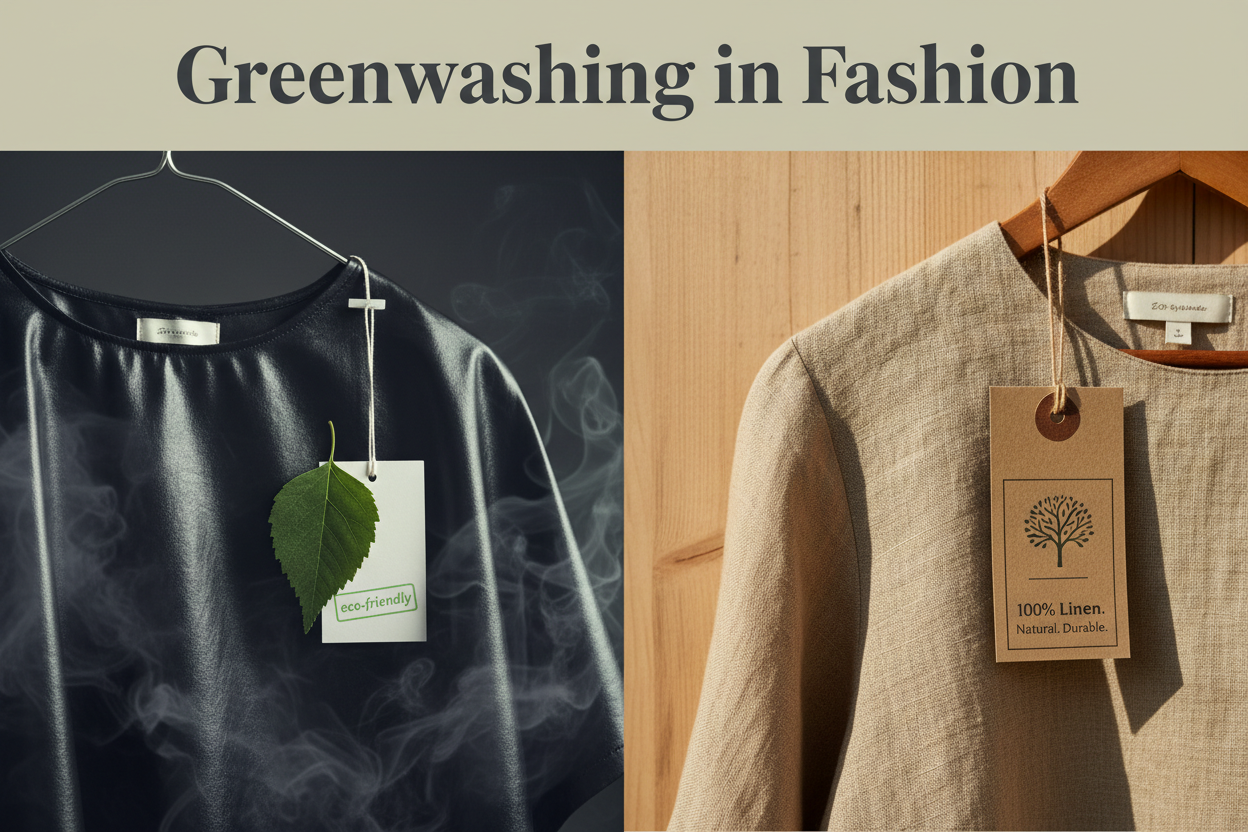
The fashion industry is one of the largest polluters in the world. Synthetic fabrics, mass production, fast trends and wasteful supply chains have caused enormous harm to our planet. To respond to growing demand for ethical clothing, many big brands have started using green language without actually changing their practices. A polyester shirt does not become eco-friendly simply because the hangtag is printed on brown recycled paper. Recycled polyester is still plastic and it still sheds microplastics into our water with every wash.


Greenwashing happens when a brand uses sustainable-sounding words, earthy visuals or vague claims to appear environmentally responsible, while their products and supply chains tell a completely different story. It is the appearance of sustainability without the substance.
In simple words: it is fashion that wants to feel good without actually doing good.
How to Spot Greenwashing in 60 Seconds
You do not need to be a textile expert to recognize greenwashing. With a little awareness and one minute of attention, anyone can make a more informed and honest choice.
1. Read the Material Tag First, not the Marketing The most honest information on a garment is on the inside label. If the composition is 95% polyester, no amount of "eco-conscious" branding can change that. Look for natural fabrics like linen, cotton, bamboo and lyocell fibers that come from nature and return to it.
2. Look for Specifics, not Vague Claims Words like "earth-friendly" or "made with love for the planet" mean very little on their own. Real sustainability is detailed. A trustworthy brand will clearly tell you where the fabric comes from, who made the garment and what certifications it carries.
3. Notice the Silence Genuinely responsible brands speak openly about their supply chain, the country, the workshop, even the hands of the artisans behind the garment. When this information is missing, it usually means there is something hidden.
4. Check the Production Speed A truly sustainable brand cannot release thousands of new styles every week. Slow fashion takes time. If a brand drops a "conscious collection" while running constant fast-fashion cycles, it is not a real commitment, it is a campaign.
5. Trust Your Hands Natural fabrics feel different. Linen has a cool, dry weight. Cotton has a soft, slightly imperfect texture. Bamboo and lyocell feel smooth and naturally light. Synthetic fabrics often feel too uniform, slick or weightless almost too perfect to be real. Your body recognizes the difference, even when the marketing tries to confuse you.


Why This Matters for What You Wear
Clothing is not just decoration. It touches our skin every day, absorbs our warmth, moves with our body through hours of work, travel and rest. When we wear something made from natural fibers, ethically produced and honestly labelled, we connect to a quieter and more thoughtful way of living.
When we wear something dressed up in green words but built from plastic, both the body and the conscience feel the gap. This is why honest fashion matters not only for the environment, but also for the relationship between you and what you wear.
How Marie & Seema Stand Against Greenwashing
At Marie & Seema, we believe trust is built through transparency. That is why we choose to do things differently. Every step, every piece.
100% Natural Fabrics Our garments are made from linen, cotton, bamboo and lyocell biodegradable, breathable and grown by the earth, not the laboratory. No hidden plastic, no synthetic shortcuts.
Designed in Germany, Handcrafted by Artisans from India Each piece is designed in Germany and lovingly handcrafted in collaboration with skilled artisans, combining European elegance with the rich textile heritage of India.
Small Batches and Custom Fit We produce only small batches of timeless designs, with the option of a custom fit. This avoids overproduction, reduces waste and ensures quality over quantity, the very opposite of fast fashion.
Mother-of-Pearl Buttons, Not Plastic Even the smallest details matter. Our shirts feature natural mother-of-pearl buttons - a sophisticated, biodegradable alternative to plastic ones.

[Marie & Seema product close-up showing natural fabric and mother-of-pearl button]
Honest Materials, Honest Words You will find no exaggerated marketing on our tags. What we say is what your garment truly is - natural, durable and made to last for many years.
Conscious Fashion is Not a Trend; It is a Choice
Greenwashing exists because shoppers care. The fact that brands feel the need to imitate sustainability shows how much your choices already shape the industry. The next step is to make those choices with awareness and confidence.
So the next time you pick up a garment, take just 60 seconds. Read the tag. Feel the fabric. Ask where it comes from, and who made it. The more questions you ask, the harder it becomes for greenwashing to survive and the easier it becomes to dress in a way that truly reflects your values.
At Marie & Seema, we believe in the Fabric of Nature, designed for modern wear - honest clothing for people who care about comfort, craftsmanship and the planet.
References:
Sustainable Fashion: https://sustainfashion.info
European Commission - Green Claims Directive: https://environment.ec.europa.eu/topics/circular-economy/green-claims_en
GOTS Global Organic Textile Standard: https://global-standard.org
OEKO-TEX Standard 100: https://www.oeko-tex.com
Textile Exchange: https://textileexchange.org


